

Body Contouring After Weight Loss: Results & Recovery

Reviewed by - Dr Nitin Ghag
MBBS, DNB - General Surgery, DNB - Plastic Surgery
Plastic Surgeon
22 Years Experience Overall (4 years as specialist)
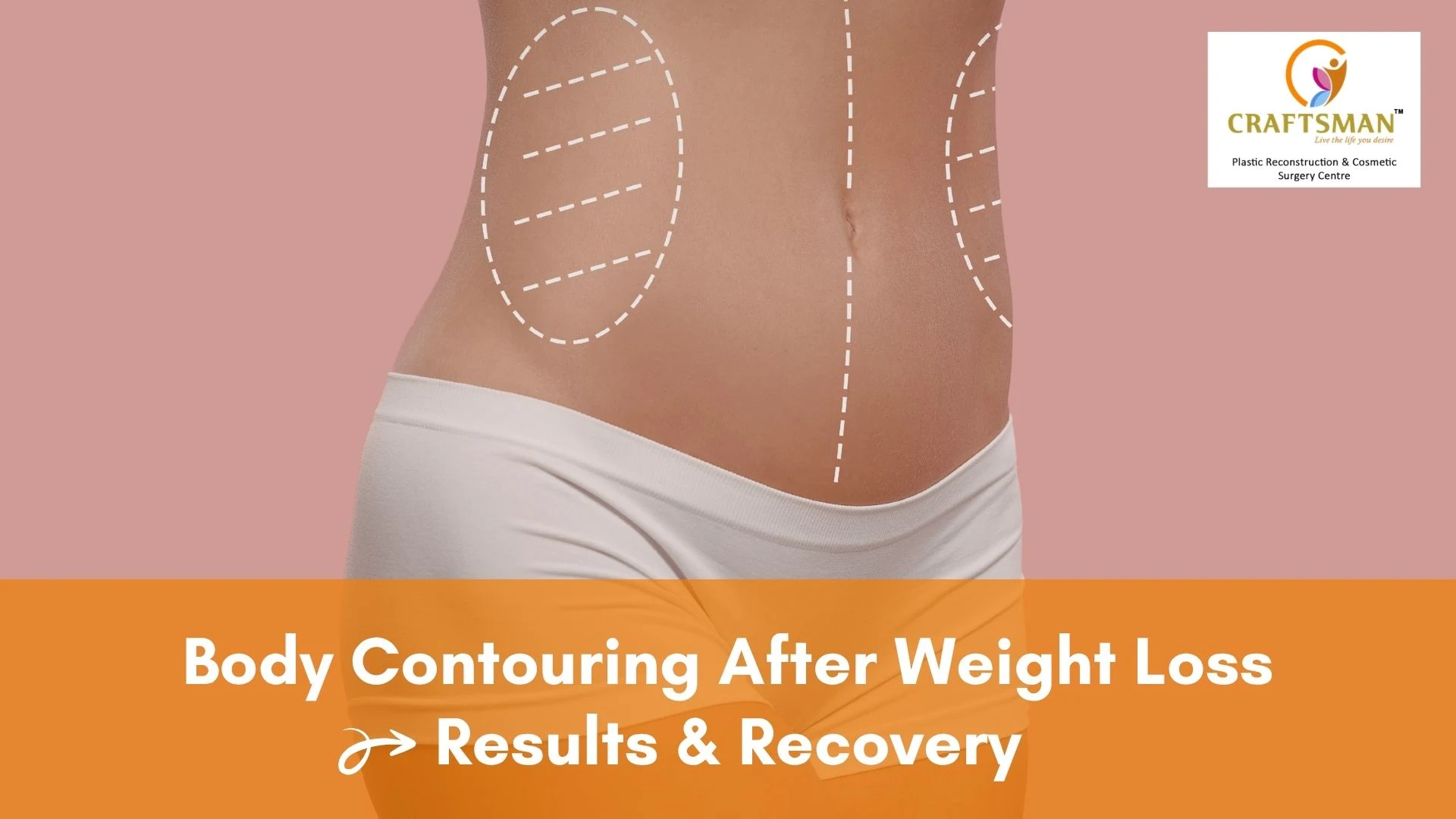
Body contouring after weight loss is a suite of surgical procedures designed to remove excess, sagging skin and residual fat following significant weight loss. While weight loss reduces body volume, it often leaves behind inelastic skin that cannot retract naturally. Contouring restores a proportional shape by tightening underlying tissues and excising redundant skin.
From a clinical perspective, surgical body contouring following major weight loss is commonly required because, although the quantity of the weight loss reduces volume, the skin can lose its elasticity, and it may not retract completely.
Body contouring helps reveal your new body shape and complete your weight loss transformation, restoring proportional body contour.
Why Significant Weight Loss Leaves Excess Skin
Your body experiences radical structural shifts when you lose a significant amount of weight or go through major weight loss. Still, while fat shrinks, the skin and tissue that held that volume of fat don’t necessarily shrink.
Elasticity and Inelasticity of the Skin
The skin stretches during weight gain to hold more fat. Over a period of time, this makes the skin less elastic. The stretched skin cannot retract fully when major weight loss removes excess fat.
This leads to:
- Too much loose skin and excess sagging skin
- Loose folds in various body areas
- Sagging or visible sag in the stomach, arms, and thighs
In simple terms, weight loss removes excess sagging, not the skin. That is why loss removes excess sagging skin only through surgery and surgical procedure approaches.
Functional vs Cosmetic Concerns
Excess skin can bring actual discomfort to the body, but many people believe this is just a cosmetic issue.
Regular issues include:
- Skin infection and rash
- Hard time to keep clean
- Limited mobility in some parts of the body
- Emotional distress despite significant weight loss
Which is why body contouring procedures can help; they are not just cosmetic surgeries but also improve function and quality of life.
Are You a Candidate for Body Contouring?
Not all who have lost weight are immediately a candidate for body contouring or ready to consider body contouring. Proper timing and health assessment are necessary.
Before any surgery, it’s important to have a stable weight and maintain a stable weight. Patients are usually instructed to maintain a stable weight for at least 6–12 months.
This guarantees:
- Long-lasting body contouring results
- Reduced risk during surgery
- Better skin adaptation
Frequent weight fluctuations after the surgery may interfere with the final body contour.
Achieving Your Target Weight
Patients should have reached your goal weight or be very close to their ideal weight before proceeding with plastic surgery.
If further weight reduction occurs following surgery, this can affect results and require additional procedures.
Medical Assessment
A qualified plastic surgeon and experienced surgeon will evaluate if you are a good candidate for body contouring or an ideal candidate for body contouring.
This includes:
- General health
- Stable weight
- Skin quality
- Realistic expectations
Core Procedures: How Surgeons Sculpt the Body
Depending on your needs, different body contouring options are available to treat excess skin and fat.
Abdominal Contouring
A tummy tuck is a well-known body contouring procedure that helps tighten the abdomen by correcting abdominal muscles and removing tissue.
A panniculectomy focuses on remove excess skin after dramatic weight loss.
Both procedures help improve posture and restore a flatter body contour.
Lower Body Restoration
For those with a substantial amount of weight loss, a lower body lift or body lift surgery is recommended.
A body lift addresses:
This lift surgery helps remove excess skin and fat, improving overall body contour.


Upper Body & Extremities
Weight loss can affect multiple areas due to weight loss.
Procedures include:
- Arm lift for sagging arms
- Breast lift for drooping
These plastic surgery procedures restore symmetry and improve body contour.
Hybrid Techniques
Liposuction is often combined with body sculpting procedures.
While liposuction removes excess fat, it does not treat loose skin. It is used to sculpt and refine the body contour.
The Surgical & Recovery Journey
For safety, multiple body contouring procedures are often staged.
This allows:
- Safer surgery duration
- Better healing
- Improved body contouring results
The Surgical Experience
Each surgery is customized.
During surgical body contouring, the surgeon will remove excess tissue, reshape tissue, and close incisions.
This surgical body approach ensures safe outcomes.
Recovery Expectations
Recovery is essential after plastic surgery.
Patients may require:
- Compression garments
- Drains
- Limited movement
Following the surgeon’s instructions is critical to shape areas of the body and achieving the final body contour.
Risks and Realities
Like any cosmetic procedure, body contouring surgery carries risks.
Safety Considerations
Possible risks include:
- Infection
- Fluid accumulation
- Delayed healing
Choosing an experienced surgeon reduces complications.
Scars
While surgery to remove excess skin does leave scars, they are placed strategically.
For most patients, improved body shape outweighs scarring.
Conclusion
After a long weight loss journey, addressing loose skin is the final step.
Body contouring can help refine your look, improve comfort, and complete your weight loss achievement.
If you’re ready, learn more about body contouring and begin your body contouring journey toward your new body with Craftsman Plastic Surgery Clinic.
FAQs
When should I get body contouring?
Wait until your weight has been stable for 6 to 12 months. This ensures your results aren’t ruined by further weight fluctuations.
How long is the recovery?
Most patients return to desk work in 2 to 3 weeks. Expect to resume full physical activity and see swelling subside by 6 to 8 weeks.
Will the scars be permanent?
Yes, but they are placed where clothing or swimwear easily hides them. Scars typically fade and flatten significantly over 12 to 18 months.
Are the results permanent?
The skin removal is permanent. However, maintaining a stable weight and healthy lifestyle is essential to prevent remaining fat cells from expanding.
Further Reading
Armpit Fat Removal: Causes, Options, and What Actually Works


Tummy Tuck After a C-Section – When to Get a Tummy Tuck
View More Services