
Power-Assisted Liposuction: Benefits, Cost & Results

Reviewed by - Dr Nitin Ghag
MBBS, DNB - General Surgery, DNB - Plastic Surgery
Plastic Surgeon
22 Years Experience Overall (4 years as specialist)
If you’ve been trying to get rid of stubborn fat through diet and exercise without success, you’re not alone. For many people, certain areas of the body simply don’t respond to healthy lifestyle changes — no matter how consistent the effort.
That’s where power-assisted liposuction steps in as one of the most advanced fat removal solutions available in cosmetic surgery today.
This guide walks you through everything you need to know about PAL — how it works, who it’s for, what to expect during recovery, and how it compares to traditional liposuction.
What Is Power-Assisted Liposuction (PAL)?
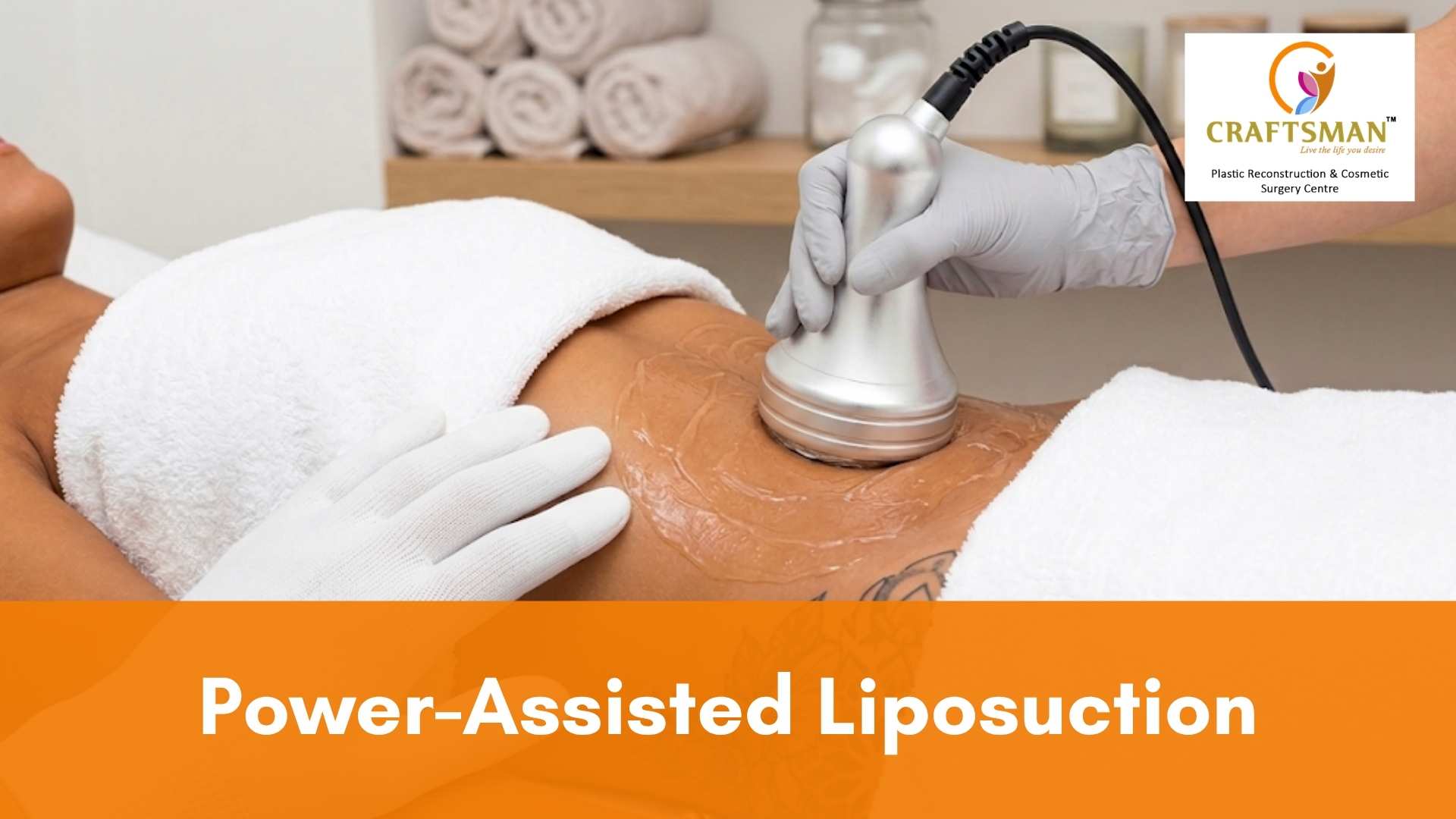
Power-assisted liposuction is a modern, technology-driven liposuction technique in which power-assisted liposuction uses a motorized cannula that vibrates rapidly to break apart and remove fat cells with greater precision and less physical force than conventional methods.
Unlike traditional liposuction — where the surgeon manually pushes and pulls the cannula back and forth — PAL relies on mechanical vibration to do the heavy lifting. This makes the process more controlled, more comfortable for the patient, and significantly less exhausting for the surgeon.
The result? A more refined body contour with less trauma to surrounding tissue and, in most cases, a faster recovery.
How Power-Assisted Liposuction Works
The Technology Behind PAL
At the heart of PAL is a specialized cannula — a thin, hollow tube connected to a motorized handpiece. When activated, the cannula vibrates at rapid, small-amplitude oscillations. These vibrations allow the surgeon to break up fat deposits far more efficiently than manual movement alone could achieve.
Once the fat cells are loosened, they’re removed through gentle suction. Because the cannula does much of the work mechanically, the surgeon can guide it with much greater accuracy, even in dense or fibrous fat areas that are notoriously difficult to treat.
Step-by-Step: The PAL Procedure
Here’s what typically happens during a PAL procedure from start to finish:
- Consultation – Your surgeon assesses your fat areas, overall body shape, and cosmetic goals to determine if PAL is appropriate.
- Pre-surgical marking – The surgeon maps the treatment area to guide precise fat removal.
- Anesthesia administration – Depending on the amount of fat being targeted and the size of the treatment area, either local anesthesia or general anesthesia is administered.
- Tumescent fluid injection – A saline and anesthesia solution is infused into the target area to numb tissue, reduce bleeding, and make fat easier to remove.
- Cannula insertion – Small incisions are made, and the motorized cannula is carefully inserted.
- Vibration and fat disruption – The cannula vibrates, breaking apart fat cells and loosening even fibrous fat deposits.
- Suction and fat extraction – Loosened fat is suctioned out while the surgeon sculpts the contour.
- Incision closure – Tiny incisions are closed, and a compression garment is applied.
- Recovery begins – The patient receives detailed post-op care instructions.
Anesthesia Options
The type of anesthesia used depends on how much fat is being removed and the number of areas being treated. For smaller, localized fat deposits, local anesthesia may be sufficient.
Larger-volume procedures typically call for general anesthesia. Your surgeon will make this recommendation based on your individual needs during consultation.
Benefits of Power-Assisted Liposuction
PAL has gained widespread popularity among both patients and plastic surgeons — and for good reason. Here’s a breakdown of its key advantages:
1. Precise Fat Removal and Superior Body Contouring
Because the cannula vibrates mechanically rather than relying solely on the surgeon’s manual force, PAL allows for far more precise fat removal. This precision is particularly valuable when treating areas that require careful contouring — like the abdomen, inner thighs, or under the chin.
Patients consistently report smoother, more natural-looking results compared to traditional methods.
2. Less Surgeon Fatigue, Better Outcomes
Traditional liposuction requires a significant amount of physical exertion from the surgeon, which can lead to fatigue — especially during long procedures. With PAL, the motorized handpiece absorbs most of the physical effort, reducing surgeon fatigue considerably.
This directly benefits the patient: a less fatigued surgeon means more consistent technique and better results throughout the entire procedure.
3. Faster Recovery with Less Bruising and Swelling
Because the vibrating cannula disrupts fat with minimal trauma to blood vessels and connective tissue, patients experience notably less bruising and swelling after PAL than after traditional liposuction.
Less tissue trauma means a faster recovery overall, with many patients returning to light activities within one to two weeks.
4. Efficient Fat Extraction in Difficult Areas
PAL performs particularly well in fibrous fat zones — such as the upper back, male chest, and previously treated areas — where scar tissue makes fat harder to remove.
The mechanical vibration allows the surgeon to remove fat more efficiently in these dense regions without extra force or multiple passes.
Treatment Areas for PAL
PAL is versatile enough to address fat deposits across a wide range of areas. Commonly treated zones include:
- Abdomen and flanks – One of the most requested treatment areas, especially for post-pregnancy contouring
- Thighs – Both inner and outer thighs, where stubborn fat tends to accumulate
- Upper arms – Ideal for addressing fat that doesn’t respond to diet and exercise
- Back and bra-line – Particularly effective given the fibrous nature of fat in this region
- Chin and neck – For removing localized fat and refining the jawline
- Hips and buttocks – For balanced, harmonious body contouring
- Chest (gynecomastia) – For male patients with excess breast tissue
Whether you’re dealing with localized fat deposits after years of effort or simply want to refine your silhouette, PAL can be tailored to your specific concerns.
Who Are the Best Candidates for PAL?
Not everyone is an ideal candidate for PAL. Understanding whether this liposuction method is right for you requires an honest conversation with a board-certified plastic surgeon.
You may be a strong candidate for PAL if you:
- Are near your ideal weight but have localized fat deposits that don’t respond to diet and exercise
- Have stubborn fat in areas like the abdomen, flanks, or thighs
- Are in good overall health with no conditions that would complicate anesthesia
- Have realistic expectations about body contouring — understanding that PAL is not a weight-loss surgical procedure
- Are a non-smoker, or willing to quit well before and after surgery
PAL may not be appropriate if you:
- Are significantly above your ideal weight
- Have poor skin elasticity (loose skin may require additional procedures)
- Have certain cardiovascular conditions affecting anesthesia tolerance
- Have active infections near the treatment area
If you’re unsure whether you’re among the best candidates for PAL, a thorough in-person evaluation with a qualified surgeon will provide clarity.
Risks and Side Effects of PAL
Like any surgical procedure, PAL carries some risks. The good news is that it tends to have a lower complication profile compared to traditional liposuction techniques — largely because of its precision and reduced tissue trauma.
Common, temporary side effects include:
- Swelling and bruising (typically resolving within 2–4 weeks)
- Temporary numbness or tingling in the treatment area
- Mild discomfort during the first few days
- Minor fluid accumulation (seroma)
Rare but possible risks include:
- Infection at incision sites
- Contour irregularities or asymmetry
- Skin discoloration
- Anesthesia-related reactions
The risk of complications is meaningfully reduced when you choose an experienced, board-certified plastic surgeon who specializes in body contouring procedures. Proper patient selection, surgical technique, and post-operative care all play critical roles in minimizing adverse outcomes.
Recovery Process and Timeline
Here’s a general timeline for patient recovery:
- Days 1–3: Rest is essential. Expect swelling and bruising, some tightness, and mild soreness. Your compression garment should be worn at all times.
- Days 4–7: Discomfort decreases. Most patients can perform light, everyday tasks at this point.
- Week 2: Many patients return to desk work. Bruising starts to fade.
- Weeks 3–6: Swelling continues to subside. Body contour improvements become more visible. Continue wearing the compression garment as advised.
- Months 3–6: Final results emerge as residual swelling completely resolves.
Recovery is quicker with PAL than with traditional liposuction, and most patients report feeling like themselves again within two weeks. Your surgeon will provide detailed instructions tailored to your specific procedure.
Tips to Support Healing
- Wear your compression garment consistently — it supports the new contour and reduces swelling
- Stay well-hydrated and eat a balanced diet to promote healing
- Avoid strenuous activity for at least 4 weeks
- Attend all follow-up appointments with your surgeon
Results: What Body Contouring Outcomes Can You Expect?
PAL delivers long-lasting improvements in body shape that most patients find well worth the process. Here’s what you can realistically expect:
Visible contouring improvements begin to show within 4–6 weeks as the initial swelling resolves. By the three-month mark, the body contour becomes noticeably smoother and more defined. Final results are typically visible at six months.
Because PAL enables precise fat removal, patients experience fewer of the irregularities — like lumps or uneven fat pockets — that can occasionally occur with manual liposuction. The treated areas feel and look natural, not “done.”
Importantly, the fat cells removed during PAL do not grow back. Results are permanent, provided you maintain a stable weight through a healthy lifestyle. Diet and exercise play a key role in preserving your outcome long-term.
Cost of Power-Assisted Liposuction in India
The cost of power-assisted liposuction in India varies depending on several factors:
- Number of treatment areas – Treating the abdomen alone costs less than combining it with the thighs and flanks
- Amount of fat removed – Larger volumes require more surgical time and resources
- Anesthesia type – General anesthesia adds to the overall cost
- Surgeon expertise – An experienced surgeon with a strong cosmetic surgery track record typically charges more — and is worth it
Clinic and city – Metro cities like Mumbai, Delhi, and Bengaluru generally have higher pricing than Tier-2 cities
PAL vs. Traditional Liposuction: Which Is Better?
Feature | Power-Assisted Liposuction (PAL) | Traditional Liposuction |
Cannula type | Motorized, vibrates automatically | Manual, hand-driven |
Surgeon fatigue | Significantly reduced | Higher physical effort required |
Fat removal precision | High — ideal for fibrous or dense fat | Moderate |
Recovery time | Faster, less downtime | Typically longer |
Bruising and swelling | Less post-op trauma | More bruising and swelling |
Suitable for fibrous fat | Yes | Limited effectiveness |
Body contouring accuracy | Superior contour control | Less consistent |
Anesthesia options | Local or general anesthesia | Often general anesthesia |
Compared to traditional liposuction techniques, PAL offers measurable advantages in precision, safety, and recovery. That said, traditional methods may still be appropriate for straightforward cases with minimal fat volume. The right liposuction method for you depends on your anatomy, goals, and the recommendation of your surgeon.
Why Choosing a Board-Certified Plastic Surgeon Matters
This cannot be overstated: the quality of your PAL results is directly tied to the skill and credentials of your surgeon.
A board-certified plastic surgeon has completed rigorous training, passed standardized examinations, and adheres to the safety standards set by professional bodies such as the Association of Plastic Surgeons of India (APSI) or equivalent recognized societies.
The society of plastic surgeons exists, in part, to protect patients by ensuring that practitioners meet these high standards.
When evaluating plastic surgeons for your PAL procedure, look for:
- Verified board certification in plastic surgery
- Demonstrated experience with power-assisted liposuction specifically
- A portfolio of before-and-after body contouring results
- A transparent consultation process where your questions are genuinely welcomed
- A fully accredited surgical facility
An experienced surgeon will also know when not to perform PAL — and will guide you toward the most appropriate treatment option for your body and goals.
Conclusion
Power-assisted liposuction offers a modern, precise, and patient-friendly approach to fat removal and body contouring. For those struggling with stubborn fat that resists diet and exercise, PAL provides an effective, well-tolerated solution with a faster recovery profile than traditional liposuction.
The key is to approach it with the right expectations — PAL is a body contouring tool, not a weight-loss shortcut — and to place your care in the hands of a board-certified plastic surgeon who understands your goals.
If you’re ready to explore whether PAL is the right fit for your body, schedule a consultation with a qualified, experienced surgeon and take the first step toward a more confident you.
FAQs
Is PAL better than traditional liposuction?
For most patients, yes — especially those targeting dense or fibrous fat areas. Power-assisted liposuction offers greater precision, less surgeon fatigue, reduced trauma, and a faster recovery than traditional liposuction techniques. However, the best liposuction method for you depends on your individual anatomy and goals.
What is the recovery time for PAL?
Most patients return to light activities within 1–2 weeks. The compression garment is typically worn for 4–6 weeks. Full results become visible at 3–6 months, when residual swelling has completely resolved.
Is PAL safe?
Yes, PAL is considered a safe and well-established cosmetic procedure when performed by a board-certified plastic surgeon in an accredited facility. As with any surgical procedure, there is a risk of complications, but these are generally low with proper patient selection and surgical technique.
How much fat can be removed in one PAL session?
The amount of fat removed in a single session depends on the patient’s health, the number of treatment areas, and safety guidelines. Most surgeons recommend removing no more than 5 litres of fat in one session to minimize risk. Your surgeon will advise on what is safe and appropriate for your case.
How long do PAL results last?
PAL results are permanent — the removed fat cells do not return. However, weight gain can affect the remaining fat cells. Maintaining results through consistent diet and exercise is essential for long-term body contouring outcomes.
Further Reading
Armpit Fat Removal: Causes, Options, and What Actually Works


Tummy Tuck After a C-Section – When to Get a Tummy Tuck
View More Services