

Mini Tummy Tuck: Procedure, Cost & Recovery Guide

Reviewed by - Dr Nitin Ghag
MBBS, DNB - General Surgery, DNB - Plastic Surgery
Plastic Surgeon
22 Years Experience Overall (4 years as specialist)
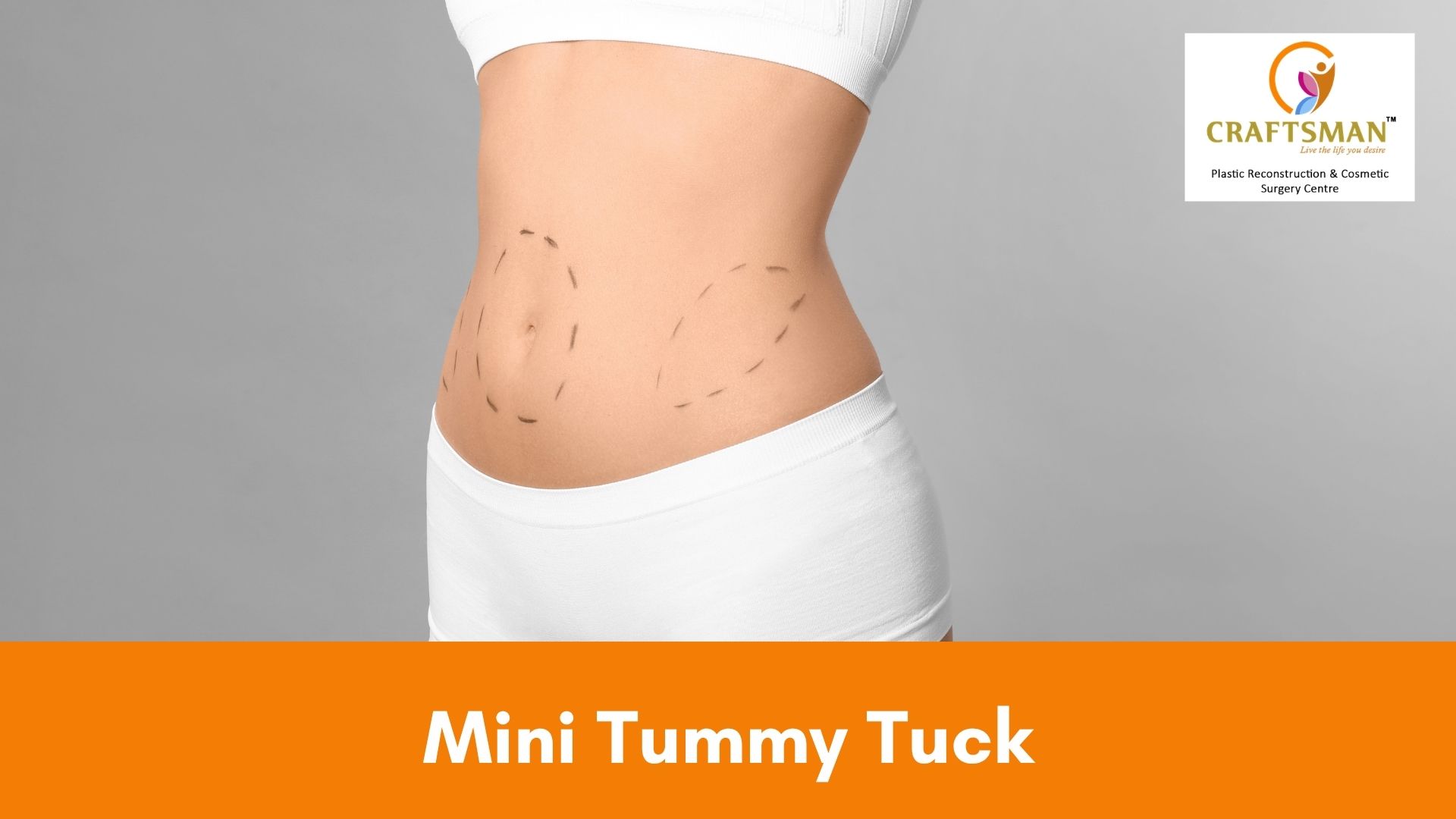
A mini tummy tuck — medically known as mini abdominoplasty — is a minimally invasive cosmetic surgical procedure that removes excess skin and fat from the lower abdomen, specifically the area between the belly button and the pubic area.
It simultaneously tightens the lower abdominal muscles through a single, shorter incision, producing a flatter, firmer lower abdominal contour with a quicker recovery than a traditional tummy tuck.
If you have a stubborn lower belly “pooch” that refuses to respond to diet and exercise, a mini tummy tuck may be the targeted solution your body needs — without the downtime or extent of a full abdominoplasty.
What Is a Mini Tummy Tuck?
A mini tummy tuck is a cosmetic surgery that removes loose skin and excess fat below the belly button using a single, shorter incision placed along the bikini line. It tightens the lower abdominal muscles and produces a flatter lower abdomen.
It is best suited for patients near their ideal weight with mild lower abdominal laxity. It does not reposition the belly button.
During the procedure, your plastic surgeon makes a single horizontal incision along the bikini line, removes excess skin and fat, and tightens the lower abdominal muscles beneath.
The result is a smoother, firmer, flatter lower abdominal contour — achieved with a shorter incision, a smaller scar, and a significantly quicker recovery than a full abdominoplasty.
Related Procedures: Understanding the Difference
To understand where a mini tummy tuck fits in the world of body contouring cosmetic surgery, it helps to distinguish it from related procedures:
Full tummy tuck (full abdominoplasty): Addresses the entire abdomen — both above and below the belly button. Requires two incisions (one hip-to-hip along the lower abdomen and one around the navel), repositions the belly button, and fully corrects diastasis recti across the entire abdominal wall.
Extended tummy tuck: A more extensive version of the full tummy tuck that extends the incision to the flanks and lower back. Designed for patients who have undergone massive weight loss and have excess skin wrapping around their sides.
Liposuction: Removes excess fat only. Does not address loose skin or muscle laxity. Often combined with a mini tummy tuck for more comprehensive lower abdominal contouring.
Panniculectomy: A medically necessary (non-cosmetic) surgical removal of a large overhanging pannus of skin and fat that causes rashes, infections, or hygiene issues. Unlike a tummy tuck, it may be partially covered by health insurance.
Mini tummy tuck with liposuction: The most common combination in body contouring plastic surgery. Liposuction targets stubborn fat in the flanks and upper abdomen, while the mini tummy tuck tightens the lower abdominal skin and muscles. Together, they produce a more sculpted, natural-looking result than either procedure alone.
Who Is a Good Candidate for a Mini Tummy Tuck?
Not everyone who wants a flatter abdomen is the right fit for a mini tummy tuck. Candidacy depends on your anatomy, health, and goals.
The best way to confirm your candidacy is to schedule a consultation with a board-certified plastic surgeon — but the following criteria will give you a clear starting point.
Ideal Candidate Profile
You may be a good candidate for a mini tummy tuck if you meet the following criteria:
- You are within your recommended weight range — typically within 10–15 pounds of your stable, ideal body weight. A mini tummy tuck is a body-contouring procedure, not a weight-loss solution.
- Your concerns are localized below the belly button. The mini tummy tuck targets the lower abdomen specifically. Your upper abdomen should already look good, with adequate skin elasticity and no significant excess.
- You have mild to moderate loose skin or excess skin and fat in the lower belly. This may be the result of pregnancy, weight fluctuations, aging, or simply genetics.
- Your lower abdominal muscles are slightly separated or weakened — but the muscle separation is limited to below the navel.
- You are in good health with no uncontrolled chronic conditions that would impair healing, such as unmanaged diabetes or autoimmune disorders.
- You are a non-smoker — or committed to quitting at least 4–6 weeks before and after surgery. Smoking significantly impairs blood flow and dramatically increases the risk of complications like wound breakdown and infection.
- You have completed your family. Pregnancy after a mini tummy tuck can reverse results. Surgeons generally recommend waiting until after your last planned pregnancy before undergoing this cosmetic surgical procedure.
- You have realistic expectations. A mini tummy tuck produces subtle, targeted improvements — not the dramatic full-abdomen transformation that a full tummy tuck provides.
Who Is NOT a Good Candidate?
A mini tummy tuck may not be appropriate if:
- Skin laxity extends significantly above your belly button — a full tummy tuck would produce better results.
- You have severe diastasis recti spanning the full abdominal wall, above and below the navel.
- You are substantially above your target weight — losing weight first is strongly recommended before any abdominoplasty procedure.
- You are pregnant or planning future pregnancies.
- You have uncontrolled systemic health conditions (heart disease, clotting disorders, immune deficiencies).
- You are an active smoker unwilling to stop.
- You require belly button repositioning as part of your aesthetic goals.
- You have a large amount of extra skin spanning your midsection — a longer incision and a full tummy tuck would be necessary to prevent skin bunching or “dog ears” at the edges.
Mini Tummy Tuck Procedure: Step-by-Step
Understanding exactly what happens during a mini tummy tuck surgery helps you prepare mentally, make informed decisions, and set realistic expectations about your experience and recovery.
Step 1 — Anesthesia Administration
The mini tummy tuck surgery begins with anesthesia. Depending on the extent of the surgery and your surgeon’s preference, you will receive either general anesthesia (fully unconscious) or local anesthesia with intravenous sedation (awake but deeply sedated).
The type of anesthesia is chosen to ensure your complete comfort and safety throughout the procedure. A board-certified anesthesiologist or certified registered nurse anesthetist (CRNA) administers and monitors the anesthesia. You will feel no pain during surgery.
Step 2 — The Incision
Once anesthesia has taken full effect, your plastic surgeon makes a single horizontal incision along the bikini line — typically 4 to 8 inches in length, placed just above the pubic area. This shorter incision is carefully positioned so that it will be hidden beneath underwear or swimwear once healed.
If you have a prior C-section scar, your surgeon will often place the mini tummy tuck incision along the same line, replacing and improving that scar rather than creating a separate one. This is one of the distinct advantages of the mini tummy tuck for patients with a previous cesarean delivery.
Step 3 — Skin and Fat Removal
Through the incision, your surgeon carefully separates and lifts the skin and fat of the lower abdomen. Excess skin and fat below the belly button are excised.
In many mini tummy tuck procedures, liposuction is also used at this stage to remove excess fat from surrounding areas — the flanks (love handles), the pubic area, and sometimes the upper abdomen — to create a more harmonious overall contour. Combining liposuction with a mini tummy tuck produces more comprehensive body sculpting than skin removal alone.
Step 4 — Tightening the Lower Abdominal Muscles
With the skin elevated and the abdominal wall exposed, your surgeon sutures the lower abdominal muscles to tighten them. This internal muscle repair flattens the lower belly from the inside, creating a firmer, more toned-looking midsection.
Only the muscles below the belly button are addressed in a mini tummy tuck — the lower abdominal muscles, not the full rectus abdominis. This is why patients with full diastasis recti may require a traditional tummy tuck instead.
Step 5 — Skin Repositioning and Closure
The remaining abdominal skin is stretched downward toward the incision, smoothed, and adjusted to eliminate the lower belly bulge. Excess skin is trimmed.
Your surgeon closes the incision with dissolvable or removable sutures, applies surgical tape or adhesive strips, and covers the area with surgical dressings.
The result immediately visible on the table — before swelling — is a dramatically flatter lower abdominal profile.
Step 6 — Recovery Room
You are moved to a monitored recovery area where nursing staff observe your vital signs as the anesthesia wears off. A compression garment is fitted immediately after surgery to minimize swelling and support the healing tissues.
Most patients are discharged 2–4 hours after the procedure. Because the mini tummy tuck is performed on an outpatient basis, no overnight hospital stay is required.
How Long Does a Mini Tummy Tuck Take?
The entire mini tummy tuck surgery takes approximately 2 to 3 hours from incision to closure, depending on the complexity of the case and whether additional procedures such as liposuction are performed simultaneously.
Benefits of a Mini Tummy Tuck
For the right candidate, a mini tummy tuck offers a meaningful set of benefits that can be genuinely life-changing — not just cosmetically, but in terms of confidence, clothing fit, and overall quality of life.
- Flatter, firmer lower abdomen.
- Quicker recovery than a full tummy tuck.
- Smaller scar.
- No belly button repositioning.
- Permanent, natural-looking results.
- C-section scar revision.
- Stretch mark removal.
- Combination-friendly procedure.
- Improved confidence.
Risks and Complications of a Mini Tummy Tuck
Common, Expected Side Effects
These side effects are normal and anticipated as part of healing:
- Swelling and bruising around the incision and lower abdomen — most pronounced in the first 1–2 weeks, significantly improved by weeks 3–4.
- Temporary numbness or altered sensation in the lower abdomen — nerves are disrupted during surgery and typically regenerate over weeks to months.
- Tightness and pulling sensation — the skin and muscles have been tightened; this feeling is expected and resolves as tissues relax.
- Scar formation — all incisions leave a scar. The mini tummy tuck scar is initially pink and slightly raised, gradually flattening and fading over 12–18 months.
Potential Surgical Complications
These complications are less common but should be understood before proceeding with cosmetic surgery:
- Infection — treated with antibiotics. Rarely requires reoperation. Reduced by following wound care instructions precisely.
- Seroma — a collection of fluid under the skin, one of the most common complications after abdominoplasty. May require aspiration (drainage) by your surgeon at a follow-up appointment.
- Hematoma — pooling of blood beneath the skin. May require surgical drainage if significant.
- Hypertrophic or keloid scarring — elevated or thickened scar tissue, more common in patients with a genetic predisposition.
- Poor wound healing — increased risk in smokers, diabetics, and immunocompromised patients.
- Deep vein thrombosis (DVT) — blood clots in the deep veins of the legs. Risk is reduced by early and consistent walking immediately after surgery.
- Asymmetry — uneven results that may require revision in rare cases.
- Adverse anesthesia reaction — rare but possible with any procedure requiring general or IV sedation anesthesia.
- Skin necrosis — tissue death near the incision edge, very rare, most commonly associated with smoking.
How to Minimize Your Risk
- Choose a board-certified plastic surgeon who regularly performs tummy tucks and body contouring procedures.
- Disclose your complete medical history, all medications, and all supplements honestly.
- Follow every pre- and post-operative instruction exactly as provided.
- Stop smoking well in advance of surgery and do not resume during recovery.
- Walk gently as soon as your surgeon clears you to — even the day after surgery — to promote circulation and prevent blood clots.
- Attend every follow-up appointment so your surgeon can monitor your healing.
Mini Tummy Tuck Recovery: Week-by-Week Timeline
Mini tummy tuck recovery is one of the most common reasons patients choose this procedure over a full tummy tuck.
Because the surgery targets a smaller area, uses a single shorter incision, and does not reposition the belly button, recovery is meaningfully faster and less uncomfortable.
Week-by-Week Mini Tummy Tuck Recovery Guide
Timeframe | What to Expect | Activity Guidelines |
Days 1–3 | Moderate pain, swelling, and bruising; surgical dressings in place; possible drainage; fatigue from anesthesia | Bed rest at home; gentle walking around the house only; sleep with torso elevated |
Days 4–7 | Pain decreasing; begin transitioning to over-the-counter pain relief (Tylenol, ibuprofen as directed); compression garment worn continuously except when showering | Short indoor walks; no driving; no lifting over 10 lbs |
Week 2 | Significant improvement in comfort; most patients return to desk or sedentary work; swelling persists but is more manageable | Light activity and short outings; no strenuous effort |
Weeks 3–4 | Swelling continues to reduce; incision healing well; intermittent tightness is normal and expected | Light errands; no gym; continue wearing compression garment as directed |
Weeks 5–6 | Near-normal energy levels; surgeon clears most patients for gradual return to exercise; scar begins to flatten | Gradually resume moderate exercise; avoid high-impact until week 6 clearance |
3 Months | Full results becoming visible as residual swelling resolves; scar lightening noticeably | Full activity resumed; follow-up photos often taken at this milestone |
6–18 Months | Scar continues to mature; color lightens from pink to silvery-white; final contour fully stable | No restrictions; focus on maintaining results through healthy lifestyle |
Mini Tummy Tuck Recovery Tips
- Sleep on a slight incline for the first 1–2 weeks. Prop pillows under your upper back and knees to reduce tension on the incision and minimize swelling.
- Walk every day starting the first day after surgery. Even slow, short walks around the house promote circulation, reduce blood clot risk, and accelerate healing.
- Wear your compression garment consistently as directed — typically 3–6 weeks. It reduces swelling, supports healing tissues, and improves your final contour.
- Stay well-hydrated. Fluids are essential for healing, skin elasticity, and flushing inflammatory byproducts from surgical trauma.
- Avoid lifting anything over 20 pounds for at least 6 weeks to allow the tightened muscle fascia to heal fully and hold.
- Begin scar management at 4 weeks post-surgery with silicone gel or silicone sheets (as recommended by your surgeon) to minimize scar visibility.
- Keep the scar out of direct sunlight for at least 6 months — UV exposure can cause hyperpigmentation of a healing scar.
- Eat a protein-rich diet during recovery — protein is the building block of tissue repair.
- Do not smoke during recovery. Even a single cigarette can constrict blood vessels enough to compromise wound healing.
When Will You See Full Results?
You will see some improvement immediately after surgery — even before swelling sets in, the lower abdominal profile is visibly flatter. However, the final result takes time to emerge:
- 6 weeks: Significant flattening of the lower abdomen; the majority of swelling has resolved.
- 3 months: Full results are clearly visible; scar is lightening and flattening.
- 12–18 months: Scar fully matured; natural-looking results are at their best.
Mini Tummy Tuck vs. Full Tummy Tuck vs. Extended Tummy Tuck
Choosing between a mini tummy tuck and its alternatives is one of the most important decisions in your surgical planning.
This comparison is designed to give you clear, factual guidance — and ultimately, to prompt the right conversation with your surgeon.
Comprehensive Comparison Table
Feature | Mini Tummy Tuck | Full Tummy Tuck | Extended Tummy Tuck |
Area treated | Below belly button only | Entire abdomen | Abdomen + flanks and lower back |
Incision length | 4–8 inches (shorter incision) | Hip-to-hip | Extends beyond hips |
Number of incisions | 1 | 2 (lower + around navel) | 2 or more |
Belly button | Not repositioned | Repositioned | Repositioned |
Muscle repair | Lower abdominal muscles only | Full abdominal wall | Full + lateral |
Diastasis recti | Partial correction (lower only) | Full correction | Full + lateral correction |
Scar | Smaller scar; bikini line | Hip-to-hip; hidden in underwear | Longest |
Recovery — light activity | 1–2 weeks | 2–4 weeks | 3–6 weeks |
Recovery — full | 6 weeks | 3+ months | 4–6+ months |
Best candidates | Near ideal weight; mild lower pooch | Post-pregnancy; significant laxity | Massive weight loss patients |
Belly button change | No | Yes | Yes |
When Is a Full Tummy Tuck the Better Choice?
A full tummy tuck is a better option — and your board-certified plastic surgeon will likely recommend it — when:
- Your skin laxity or excess skin and fat extends above the belly button.
- You have full diastasis recti — separation of the abdominal muscles above and below the navel.
- You have had multiple pregnancies with significant changes to the upper and lower abdomen.
- Your belly button requires repositioning for aesthetic harmony.
- You have a large amount of extra skin spanning the entire midsection that a shorter incision cannot adequately remove without causing skin bunching.
In these situations, a full tummy tuck surgery provides superior, more comprehensive results — making it the right choice despite its longer recovery and greater cost.
Your plastic surgeon will evaluate your skin elasticity, fat distribution, and muscle tone during your consultation to determine the appropriate approach.
Combining a Mini Tummy Tuck with Other Procedures
One of the significant advantages of a mini tummy tuck is how well it combines with complementary cosmetic procedures.
Combining surgeries means sharing anesthesia and facility fees — which is more economical than separate surgical sessions — while also consolidating your recovery into a single healing period.
Mini Tummy Tuck + Liposuction
This is the most commonly performed combination in body contouring cosmetic surgery. While the mini tummy tuck removes excess skin and tightens the lower abdominal muscles, liposuction simultaneously removes excess fat from the flanks (love handles), upper abdomen, and pubic area.
The combination addresses both the structural and volume-related aspects of lower abdominal fullness, producing a more sculpted and natural-looking overall contour.
Mini Tummy Tuck as Part of a Mommy Makeover
A mommy makeover is a customized combination of cosmetic surgical procedures designed to restore a woman’s pre-pregnancy body. A mini tummy tuck is frequently the centerpiece of a mommy makeover — often paired with:
- Breast augmentation — to restore volume lost after pregnancy and breastfeeding.
- Breast lift (mastopexy) — to correct ptosis (sagging) caused by pregnancy and nursing.
- Liposuction — to contour the flanks, thighs, or back.
Performing these procedures together under a single anesthetic reduces overall cost, limits total recovery time, and produces balanced, harmonious results across multiple areas simultaneously. It is important to have completed your family before pursuing a mommy makeover, as future pregnancies will significantly impact results.
Mini Tummy Tuck + Breast Procedures
Breast lifts or augmentations can be safely combined with a mini tummy tuck in one surgical session.
Your plastic surgeon will assess the overall surgical plan, duration, and safety profile to ensure combining procedures is appropriate for your health and goals.
Mini Tummy Tuck Results: What to Realistically Expect
Immediate vs. Long-Term Results
One of the first things patients ask is: “When will I see my results?” The answer has several layers.
Immediately after surgery — before swelling peaks — there is already a visible flattening of the lower abdomen. However, swelling from the surgical procedure will temporarily obscure your final result.
At 6 weeks — the most significant swelling has resolved. Your lower abdomen is noticeably flatter, firmer, and more contoured. Most patients feel comfortable showing their results at this stage.
At 3 months — residual swelling has fully resolved and your full results are clearly visible. The scar is pink but flattening.
At 12–18 months — the scar has matured to a fine, silvery-white line hidden within the bikini line. The natural-looking results of your mini tummy tuck are at their best.
Are Mini Tummy Tuck Results Permanent?
Yes — the structural results of a mini tummy tuck surgery are permanent. The excess skin and fat that were removed cannot regrow. The abdominal muscles that were tightened remain in their corrected position.
However, your results are not protected from future lifestyle changes. Significant weight gain — even 15–20 pounds — can cause new fat deposits and skin laxity in the treated area.
Conclusion
If you have been managing a lower belly pooch that does not respond to diet or exercise — a remnant of pregnancy, weight loss, or simply your body’s natural anatomy — a mini tummy tuck may be the targeted solution that finally delivers the result you have been working toward.
The procedure is safe, effective, and produces permanent improvements in lower abdominal contour with a recovery timeline that most patients find very manageable.
For the right candidate, it offers a meaningful quality-of-life improvement: fitting better in clothing, feeling more confident at the beach, and finally seeing a lower abdomen that reflects the effort you already put into your health.
FAQs
How long is mini tummy tuck recovery?
Mini tummy tuck recovery takes approximately 6 weeks for a full return to activity. Most patients return to light desk work within 1–2 weeks. Moderate activity resumes around weeks 3–4. Full exercise is generally cleared at the 6-week mark. Residual swelling continues to resolve for up to 3 months, when full results become visible.
Will a mini tummy tuck affect my belly button?
No. A mini tummy tuck does not reposition or alter the belly button. The procedure addresses only the lower abdomen below the navel.
Is a mini tummy tuck permanent?
Yes. The excess skin and fat removed during the mini tummy tuck procedure do not regrow, making the structural results permanent.
What does a mini tummy tuck scar look like?
The scar is a horizontal line approximately 4–8 inches long, positioned just above the pubic area along the bikini line — a smaller scar than that of a full tummy tuck.
Further Reading
Armpit Fat Removal: Causes, Options, and What Actually Works


Tummy Tuck After a C-Section – When to Get a Tummy Tuck

View More Services